choosing and paying for caskets, outer burial containers and the other funeral goods sold alongside them
Standing in the casket room? The printed list answers more than the display does
Why the printed casket price list settles questions the display room leaves open, how the floor is arranged around the middle price, and the order the decisions actually arrive in.
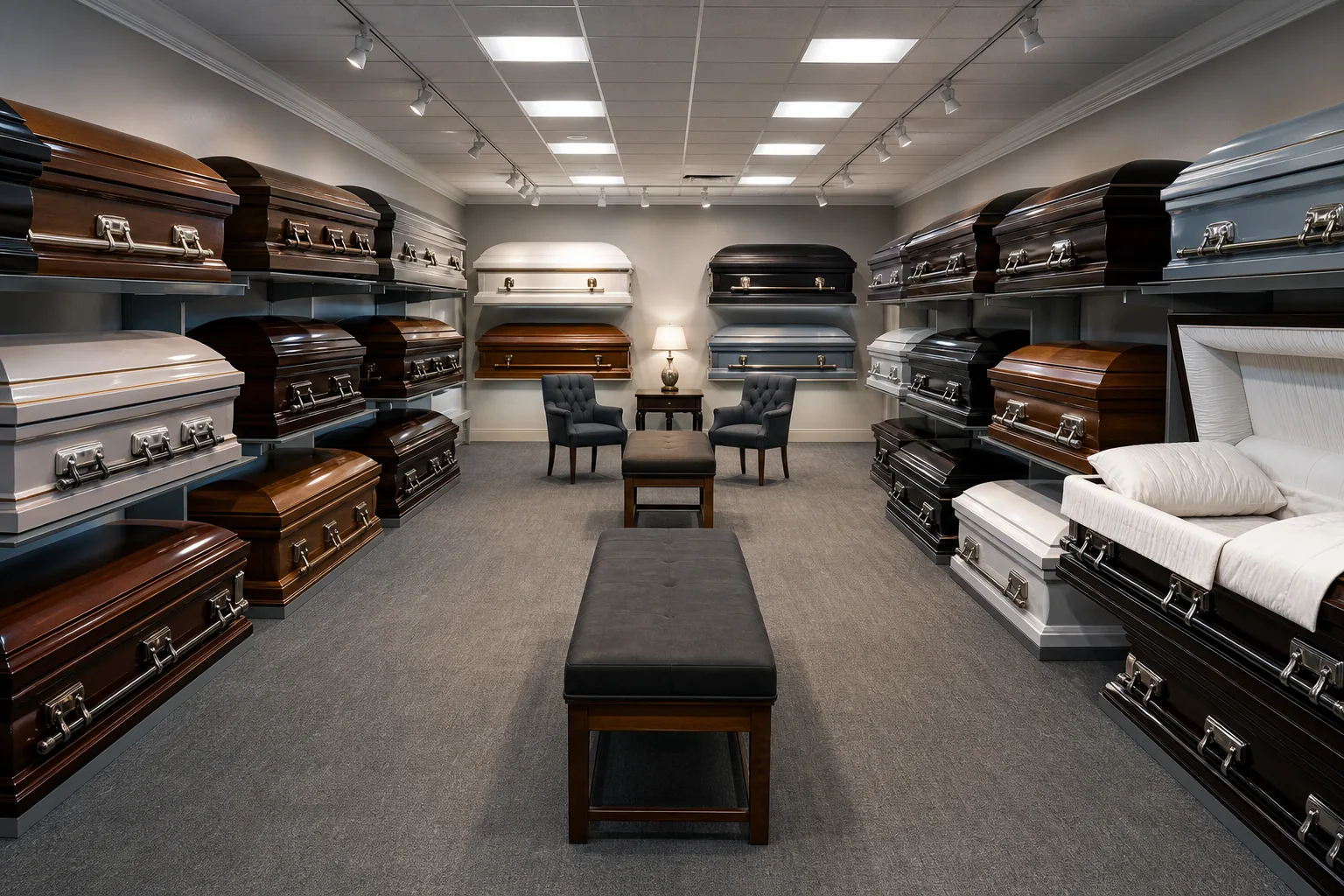
A printed casket price list puts the cheapest and most expensive models in one column, side by side. A walk through the display room shows them at opposite ends of the building, minutes apart.
The display room is arranged to be walked through, and walking through it is the least useful thing a buyer can do first. Models are set at eye height, lids propped open, interiors lit, and the price card sits on a small stand at the foot end where it is read last, after the fabric has been touched and the corner detail admired. The printed price list does the opposite. It sets every model the funeral home offers in a single column, with the price beside each one, and it can be read in four minutes standing in the parking lot.
What the list shows that the room does not
A casket price list has to name each casket the provider sells and give the price for it, and that requirement comes from the Funeral Rule, which the Federal Trade Commission oversees. The practical value is not the individual number but the spread. On paper you see the cheapest model and the most expensive one at the same moment, which the room is arranged to prevent, and you see the gaps between them, which is where the pricing logic lives. You also see models that are not on the floor at all. Most providers stock a fraction of what they sell, and the rest exists only as a line on the sheet or a corner sample in a book.
How the floor is arranged
The room is usually built around a middle price, with two or three models clustered just above it and just below it, and it is the cluster that does the persuading. The lowest-priced casket, if it is displayed at all, tends to be in a corner, at floor level, sometimes only as a cut-away section or a quarter panel on a rack. The highest-priced one is displayed whole, open, and near the entrance. None of this is deception; it is merchandising, the same arrangement a mattress showroom or an appliance floor uses, and it works because comparison is easiest between neighbors. Reading the list first turns the cluster back into what it is: four options among fourteen.
The order the decisions actually come in
The casket is rarely the first decision, though it is often the first one presented. Burial or cremation comes first, because it determines whether a container is a casket, a rental shell with an insert, or a cardboard or plywood box. Cemetery requirements come next, since a plot that requires a sealed outer container adds a purchase that the casket price list does not cover. Whether there will be a viewing comes third, because it governs almost nothing about the shell and a great deal about the interior. Only then does material matter, and material is the fork that sets the price band: steel by gauge, stainless, copper or bronze, or hardwood by species.
Once those three questions are settled, the list narrows itself. A cremation with no viewing eliminates most of the sheet. A burial with a viewing in a cemetery that requires a vault leaves the material question and one more, which is whether the gasket and the latching mechanism are worth what they add. The same reading works away from the building. Caskets offered by outside sellers are listed with the same handful of facts, shell material, gauge or wood species, interior fabric and hardware, so the columns line up against the funeral home's own sheet without much translation, and the provider is required to accept a casket you supply without charging a handling fee for it.
What the decision actually costs
The casket is usually the largest single item on a funeral bill, and the distance between the bottom of the list and the middle of it is often larger than the distance between the middle and the top. A twenty-gauge steel casket with a crepe interior and a hardwood casket in poplar or oak may sit within a few hundred dollars of each other, while the jump from either into bronze or into a heavily carved premium hardwood is measured in thousands. Gasketed sealing and a locking mechanism add a defined amount that the list will show if you compare a sealed and unsealed version of the same shell. The interior fabric, crepe against velvet, moves the number less than most buyers expect.
Worth pricing separately: the outer burial container, which the cemetery requires and the funeral home sells on a different list, and which can approach or exceed the cost of a modest casket. A buyer who has read both lists before entering either room knows the total shape of the purchase, and can decide where the money is best spent, which is a genuine choice rather than a reaction. Some families spend it on the casket. Some spend it on the vault, some on the cemetery plot, and some on a longer visitation. The list makes that allocation visible while it can still be changed.
Ask for the casket price list and the general price list at the same time, before any appointment, by phone if that is easier, since a provider has to give the prices over the telephone as well. Read them at a kitchen table. Mark three models and their numbers, then walk the floor to confirm what the paper already told you.
Federal funeral rules require providers to give prices over the phone to anyone who asks. You do not have to sit down in an arrangement office to learn what a casket costs.
Stocked versus offered
Most funeral homes display only a portion of what they sell. Models that exist as a corner sample, a photo book page, or a line on the sheet are still available to order.The crowded middle
Display floors are typically built around a mid-range price, with several similar models clustered just above and below it. Comparison between neighbors is the easiest kind, which is why the cluster is there.Corner and cut-away displays
The lowest-priced casket may appear only as a quarter panel on a rack or a cut-away section at floor level. It is still on the price list at its full listed price.- Order of decisions Burial or cremation, then cemetery requirements, then whether there will be a viewing. Casket material is the fourth question, not the first, and answering the earlier ones eliminates most of the list.
- Material sets the band Steel by gauge, stainless, copper, bronze, or hardwood by species is the fork that determines the price range. Everything after it moves the number in smaller increments.
- Interior fabric moves little The step from crepe to velvet usually costs less than buyers assume. The shell material and the sealing hardware account for far more of the difference between two models.