Buying a casket somewhere else? What to check before the delivery truck arrives
The Seventh Work- Subject
- choosing and paying for caskets, outer burial containers and the other funeral goods sold alongside them
- Editor
- The The Seventh Work team
- Subject
- choosing and paying for caskets, outer burial containers and the other funeral goods sold alongside them
The Seventh Work
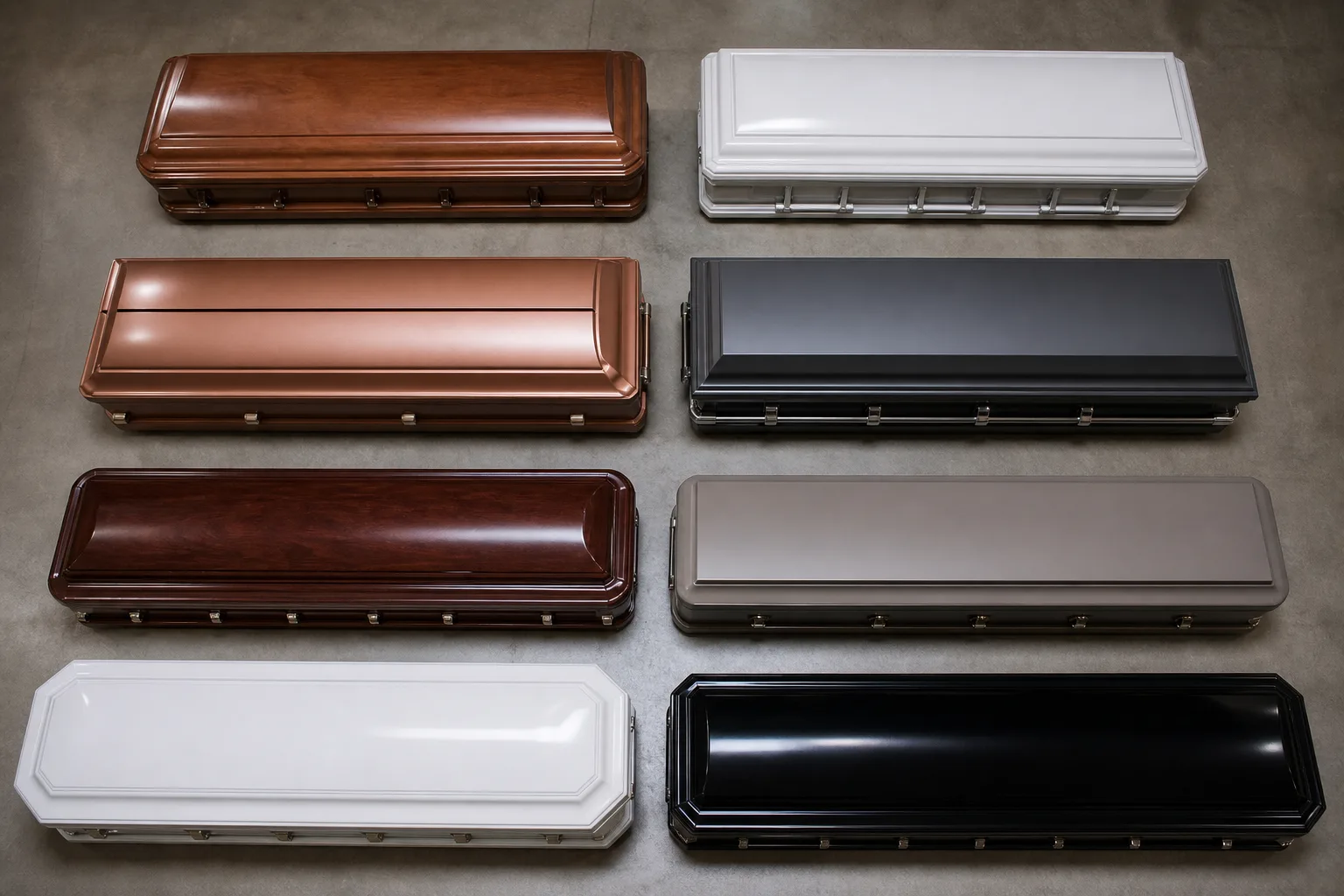
The casket in the funeral home's selection room and the casket on a warehouse website in another state are often the same object, built by the same handful of manufacturers, finished the same way, and shipped from the same regional distribution points. What separates them is the markup, the delivery window, and how much of the specification you can actually see before you pay. A family working through arrangements in the days after a death rarely has time to price both, which is exactly why the comparison is worth setting out plainly in advance.
The provision that makes the comparison possible at all
The Federal Trade Commission is responsible for the Funeral Rule, the federal regulation that governs how funeral goods and services are priced and disclosed. Two of its provisions matter here. A funeral provider may not refuse to handle a casket or an outer burial container that the family bought from someone else, and it may not charge a fee for doing so, whether that fee is called a handling charge, a receiving charge, or something folded quietly into another line. The provider also may not require anyone in the family to be present when the casket is delivered. Those are federal requirements, not house courtesies, and they apply to every provider in every state.
The practical effect is that the outside purchase is a real option rather than a fight. A funeral home that quotes a receiving fee is describing something the rule does not permit, and the correction is usually immediate once the provision is named. Ask for the general price list at the start, read the casket section, and see whether any charge is written there that would only apply to a casket brought in. If one appears, that is the moment to raise it, before the arrangement conference moves on.
The national warehouse against the shop across town
Online sellers compete on volume and price, and their catalogs run deep: steel in several gauges, hardwoods, cloth-covered softwood, cremation containers, and rental-insert combinations. The photographs are good and the specifications are usually stated in writing, which is more than some selection rooms offer. What you give up is the ability to lift the lid, feel the hinge, and see the interior in daylight. A local woodworker sells the reverse trade. You can visit the bench, look at the joinery, ask what the finish is, and specify dimensions, but the piece may be built to order, the price is rarely lower than a plain retail casket, and the schedule depends on one person's calendar.
Both routes deserve the same questions. Ask what the shell is made of and at what thickness, whether the lid is sealed or unsealed, what the interior fabric is, and whether the handles are structural or decorative. Ask the weight and the exterior dimensions, because an oversize casket may not fit a standard grave liner or vault and will change what the cemetery quotes. Ask whether the price includes freight to the funeral home, or whether that is added at checkout.
Timing is the part that goes wrong
Price differences are visible on a screen. Delivery is not. Before ordering, fix the date and hour of the service with the funeral home, then confirm with the seller that the casket arrives at least a full business day earlier, at the funeral home's street address, during hours when someone is there to sign. Ask what happens if the truck is late: whether the seller ships a replacement, refunds, or does neither. A local builder can often deliver on a few hours' notice, which is a genuine advantage when a death is sudden and the service is set quickly.
What a careful reader checks before paying
Get the specification and the delivery commitment in writing, from both sides. Keep the order confirmation, the freight tracking number, and the funeral home's price list together, and compare the casket line on the final statement of goods and services selected against what you were quoted. Damage in transit is the one real risk, so photograph the crate on arrival and inspect the lid, corners and hardware before it is moved inside. Sellers that handle this well say so in their return terms, and those terms are worth reading before the card is charged rather than after.
The comparison usually comes down to two things a family can weigh honestly: how much the same construction costs from each source, and how confident each source is about arriving on time. Both are answerable in an afternoon, and the federal protections mean the answer, whichever way it goes, will be honored.
| No attendance requirement | Providers may not require a family member to be present when an outside casket is delivered. That means a weekday freight window does not have to disrupt anyone's schedule. |
| Same manufacturers, different markups | A small number of manufacturers supply both funeral home showrooms and online retailers. Two caskets with different price tags are often identical construction. |
| Exterior dimensions matter | An oversize casket may not fit a standard grave liner or vault, which changes what the cemetery charges. Get the outside length and width in writing before ordering. |